
You’re Not Busy, You’re Bottlenecked
“Most founders don’t need more time, they need less on their plate.”
— Helena Klassen
There comes a point in nearly every business where hard work stops producing the same results.
You stay busy from morning to night.
Your calendar stays full.
Your inbox never slows down.
You are constantly solving problems, answering questions, and keeping everything moving.
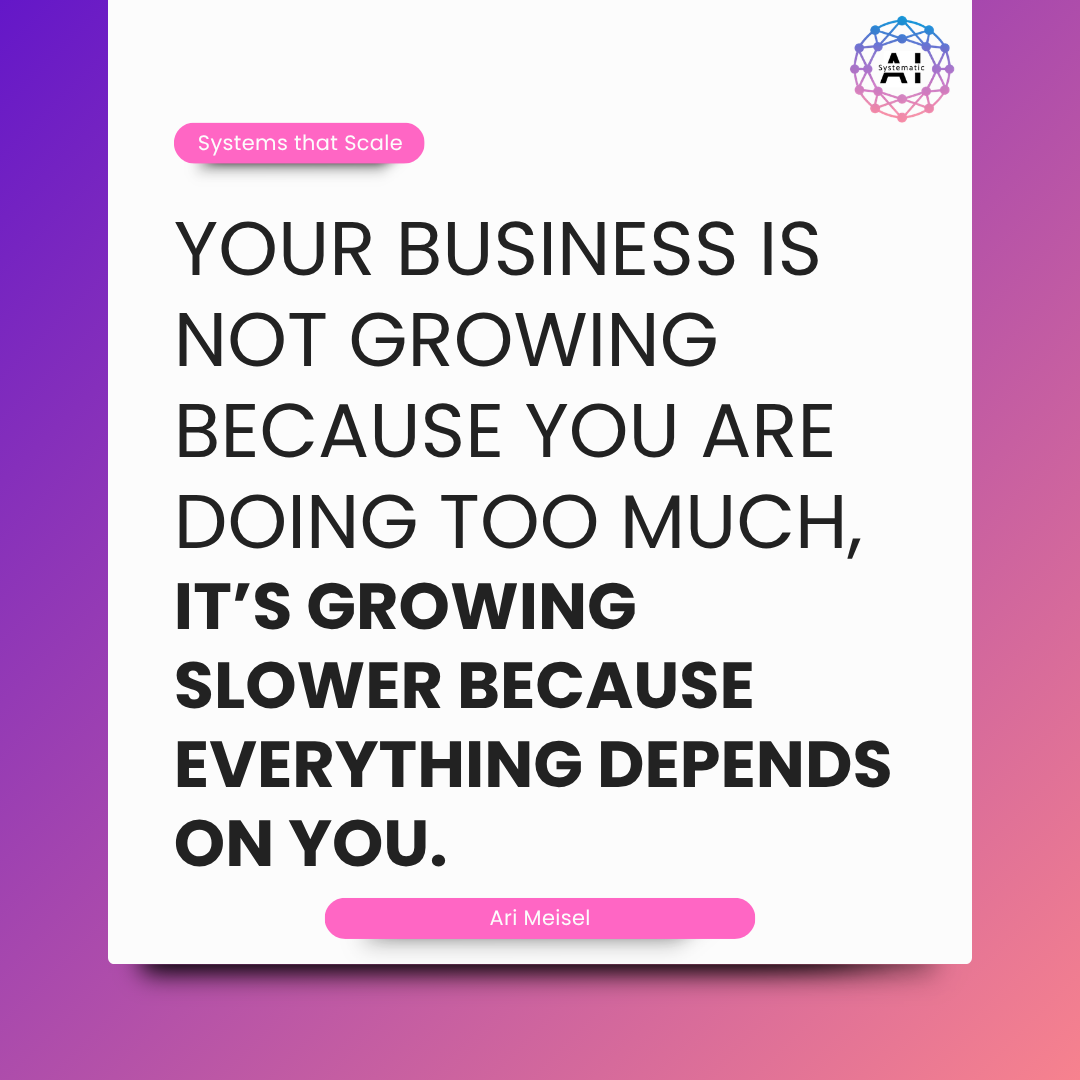
Yet despite all the effort, growth feels slower than it should.
This is the moment many founders misunderstand.
The problem is not that you are too busy.
The problem is that you have become the bottleneck.
When every decision, approval, task, and process depends on you, the business can only move as fast as your personal capacity allows.
And eventually, that limit gets exposed.
The Hidden Problem Behind Constant Busyness
Most business owners wear busyness like proof of commitment.
The long hours feel productive.
The packed schedule feels important.
The constant involvement feels responsible.
But busyness and progress are not the same thing.
A business becomes bottlenecked when too much operational weight sits on one person.
You review every detail.
You answer every message.
You fix every issue.
You approve every decision.
The business starts revolving around your availability instead of functioning through systems.
At first, this feels manageable.
Over time, it creates friction everywhere.
Projects slow down.
Communication becomes delayed.
Teams wait for direction.
Opportunities get postponed.
The business is not struggling because there is not enough work happening.
It is struggling because too much work requires your direct involvement.
As entrepreneur Michael Gerber explained in The E Myth Revisited, many founders unintentionally create businesses that cannot operate without them.
That is not scalability.
That is dependency.
Why Founders Become the Bottleneck
Most entrepreneurs do not intentionally create operational dependence.
It usually starts from good intentions.
You care deeply about quality.
You want things done correctly.
You move quickly.
You trust yourself to solve problems efficiently.
But over time, this creates a dangerous pattern.
Instead of building systems, you build reliance on yourself.
Several factors often contribute to this.
Fear of Letting Go
Founders often worry that delegation will reduce quality or create mistakes.
So instead of teaching processes, they continue handling tasks personally.
The result is short term control but long term limitation.
Lack of Documented Systems
Many businesses operate through memory instead of structure.
Processes exist in conversations, habits, or scattered notes instead of clear workflows.
Without systems, delegation feels risky because consistency depends entirely on the founder’s knowledge.
Constant Context Switching
One of the biggest hidden drains on productivity is mental fragmentation.
Switching between customer service, operations, meetings, marketing, admin work, and decision making creates cognitive overload.
Even when work gets completed, efficiency drops dramatically.
Identity and Control
Some founders subconsciously connect their value to being needed everywhere.
Being involved in everything can feel validating.
But businesses scale through operational clarity, not founder overextension.
Leadership expert John Maxwell once said, “You cannot do everything yourself if you want to do anything great.”
That principle becomes more important as a business grows.
The Real Cost of Being the Bottleneck
The consequences are not always visible immediately.
At first, the business still functions.
Revenue may still grow.
Clients may still be happy.
But internally, pressure begins building.
Slower Decision Making
When every approval flows through one person, progress slows naturally.
Teams become hesitant.
Projects stall.
Execution loses momentum.
Burnout
Founders often assume exhaustion is simply part of entrepreneurship.
But burnout is frequently a systems issue, not a work ethic issue.
Carrying operational responsibility for every moving part creates constant mental fatigue.
Inconsistent Operations
Without clear ownership or systems, processes become reactive instead of repeatable.
The business constantly shifts based on urgency rather than structure.
Limited Growth Capacity
A founder has limited time, energy, and focus.
If the business cannot operate without constant founder involvement, scalability becomes impossible.
At some point, growth stops being a marketing problem or sales problem.
It becomes a capacity problem.
Busy Founders Often Delay the Wrong Things
Ironically, the founders who most need systems are often the least likely to prioritize them.
Why?
Because systems work feels less urgent than immediate tasks.
Documenting processes.
Delegating responsibilities.
Building workflows.
Training support.
These activities get postponed because operational fires feel more pressing.
But every delayed system increases future pressure.
Every undocumented process creates more dependency.
Every task kept unnecessarily creates more bottlenecks.
The business slowly becomes heavier instead of stronger.
What Removes the Bottleneck
The solution is not simply “working less.”
The solution is redesigning how work flows through the business.
1. Identify Founder Level Responsibilities
Not everything requires the founder’s direct involvement.
Your highest value responsibilities should include:
• Vision and strategic direction
• High level decision making
• Relationship building
• Business development
• Leadership and culture
Everything else should be evaluated honestly.
2. Audit Repetitive Work
Track your responsibilities for several days.
Look for:
• Repetitive administrative tasks
• Constant interruptions
• Manual processes
• Tasks someone else could learn
• Work that drains energy without creating growth
These areas are often the first bottlenecks to solve.
3. Build Repeatable Systems
Systems reduce dependency.
Document workflows clearly:
• Step by step instructions
• Communication expectations
• Tools and access
• Desired outcomes
• Standard procedures
Clarity creates consistency.
4. Delegate Ownership, Not Just Tasks
Real delegation goes beyond task completion.
Instead of constantly managing every step, assign clear outcomes and accountability.
This creates operational momentum without requiring constant supervision.
5. Create Operational Support
This is where virtual assistance and operational support become valuable.
A properly integrated support system can handle:
• Inbox management
• Scheduling
• Customer communication
• Administrative work
• Social media coordination
• Data organization
• Workflow management
But the true benefit is not simply task completion.
It is removing operational weight from the founder.
That creates room for strategic thinking and sustainable growth.
Systems Create Freedom
Many founders believe freedom comes after growth.
In reality, growth often comes after structure.
When systems are strong:
• Teams move faster
• Communication improves
• Execution becomes more consistent
• Decision making becomes clearer
• Founders regain strategic capacity
The business stops depending entirely on one person.
That shift changes everything.
Entrepreneur Dan Martell summarized it well: “Your goal is not to be busy. Your goal is to be effective.”
Those are not the same thing.
A Different Perspective on Productivity
Being overwhelmed is not always evidence of ambition.
Sometimes it is evidence of operational dependence.
The founder becomes the approval system.
The communication hub.
The problem solver.
The backup plan for everything.
Eventually, the business cannot grow past that structure.
This is why many businesses plateau despite strong demand or capable teams.
The issue is not effort.
It is flow.
Your business can only scale when responsibility, systems, and execution stop depending entirely on you.
The Real Shift
Instead of asking:
“How do I get more done?”
Start asking:
“What still depends on me that no longer should?”
That question changes how businesses scale.
Because sustainable growth is not built through constant founder overload.
It is built through systems, delegation, and operational clarity.
And the moment the business stops revolving around one person, growth becomes far more sustainable.
If you’re ready to stop operating as the bottleneck and start building scalable systems, grab our free guide: The 6 Proven Marketing Systems That Drive 25% Growth.
Or join our on demand webinar to learn how smarter systems create more freedom, consistency, and sustainable growth.
